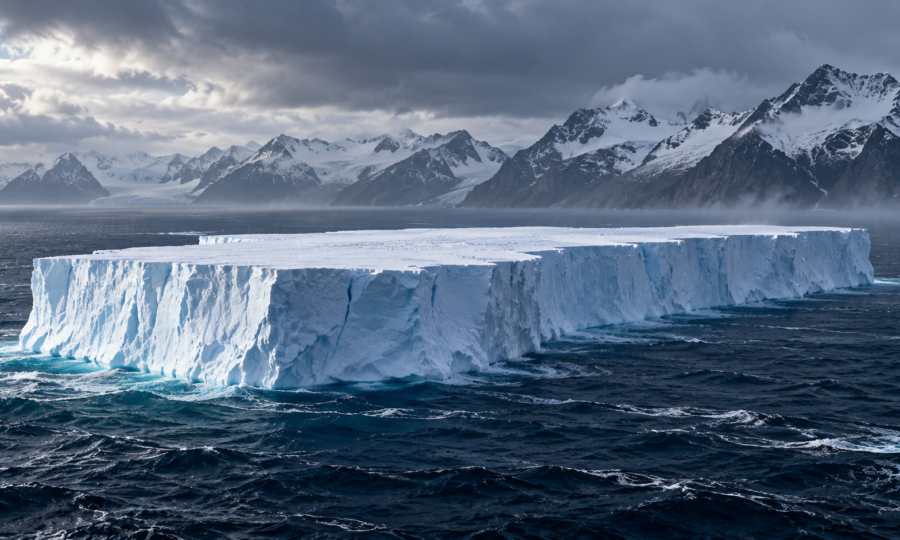
An Antarctic iceberg known as A-81 has reached the waters near South Georgia, a remote island in the South Atlantic Ocean, after traveling away from the Weddell Sea.
NASA highlighted the iceberg’s journey in a report published on Tuesday, describing how the massive piece of floating ice moved relatively quickly through the Southern Ocean before slowing near the island’s underwater continental shelf.
The development offers another example of how ocean currents and seafloor geography can influence the movement of Antarctic icebergs.
An Iceberg’s Journey Across the Southern Ocean
Icebergs form when large sections of ice break away from glaciers or floating ice shelves.
Once separated, they can travel considerable distances, pushed by ocean currents and affected by winds and changing sea conditions.
The Weddell Sea is an important starting point for many icebergs that eventually enter the South Atlantic.
Some continue into warmer waters, where melting and fragmentation gradually reduce their size.
Others slow down or become trapped temporarily as they encounter shallow underwater features.
Why South Georgia Matters
South Georgia lies in a region where Antarctic icebergs can encounter complex ocean currents and relatively shallow waters.
As an iceberg approaches the island’s surrounding shelf, its movement may change significantly.
The underwater landscape can influence local currents and, depending on an iceberg’s depth, may even cause it to become grounded.
For researchers, tracking these movements helps explain how large masses of ice interact with the ocean.
Satellites Reveal Changes in Remote Waters
Observing icebergs in the Southern Ocean is difficult because of the region’s distance from populated areas and its challenging weather.
Satellite imagery allows scientists to follow icebergs over time without needing to send ships into hazardous waters.
By comparing images collected on different dates, researchers can examine changes in position, shape and surrounding sea conditions.
These observations also contribute to a broader understanding of how ice travels from Antarctica into the Atlantic Ocean.
Why Scientists Keep Watching
Large icebergs are a natural part of the Antarctic environment, but their movements can still have important consequences.
As they drift and melt, they release freshwater into surrounding ocean waters.
Their presence may also affect navigation and marine environments, particularly when they approach islands or shipping routes.
The arrival of A-81 near South Georgia provides scientists with another opportunity to study these processes.
NASA’s latest observations underline the importance of continued satellite monitoring in one of the world’s most remote ocean regions.