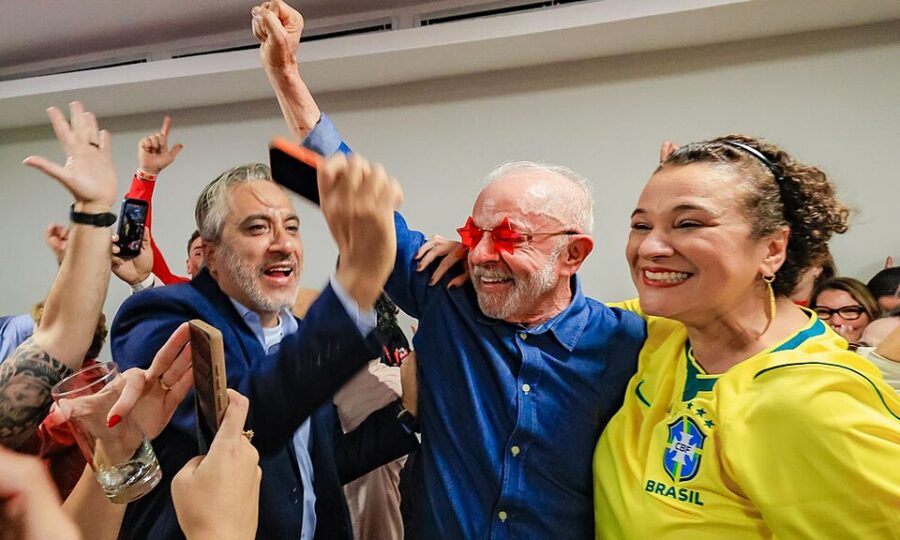
Brazil’s president secures a new term after a closely contested runoff, while his defeated rival vows to challenge the outcome.
Brazilian President Luiz Inácio Lula da Silva has won re-election, defeating opposition senator Flávio Bolsonaro in a closely watched presidential runoff that exposed deep political divisions in Latin America’s largest country.
According to Brazil’s electoral authorities, Lula received 51.79% of valid votes, compared with 48.21% for Bolsonaro. The result marks a significant political comeback for Lula, who trailed his opponent in the first round of voting earlier this month.
A Narrow Victory in a Divided Country
The result reflects a sharply contested campaign in which voters weighed concerns about public security, living costs, corruption and the country’s economic direction.
Lula’s supporters point to his record on social programmes and employment, while critics have raised concerns about corruption controversies and the government’s handling of crime and the economy.
Bolsonaro’s campaign appealed to voters seeking a tougher approach to public security and a shift away from the policies associated with Lula’s Workers’ Party.
Bolsonaro Signals a Legal Challenge
Flávio Bolsonaro has refused to accept the result and said he intends to pursue legal action seeking to annul the election.
His challenge centres on a last-minute decision to extend voting hours by two hours after disruptions affected access to polling stations in some areas. The extension followed reports of transportation problems and severe weather.
Brazil’s electoral authorities have recognised Lula’s victory. A legal challenge does not, by itself, overturn the certified result.
What the Result Means for Brazil
Lula’s victory suggests that Brazil will continue pursuing a foreign policy that emphasises multilateral diplomacy and relations with China and other countries in the Global South.
The outcome also has implications for relations with the United States, particularly amid political differences over trade, regional security and economic policy.
At home, Lula faces the challenge of governing a country where the election exposed a narrow divide between competing political visions. Economic pressures, public safety and the strength of the opposition are likely to remain central issues during his next term.
The Road Ahead
The immediate focus will be on the handling of Bolsonaro’s legal challenge and the political response to the election result.
Beyond the dispute, the new government will need to address voters’ everyday concerns while working with a politically divided Congress.
The election has delivered Lula another term, but the close margin highlights the difficulties that lie ahead for Brazil’s leadership.
Sources: Brazil’s Superior Electoral Court; Associated Press; CNN reporting.
This article is an independently written summary based on published reporting. Verify the latest court developments and official election figures before publication.